Call us Toll Free: +1 800 234 1689

Tag: fuel contamination

Diesel bugs hero image showing microbes

Got Diesel Bugs in Your Fuel? How to Fix the Problem

  • Blog

Diesel Bug or Diesel Algae?

Diesel bugs — also called diesel algae — might be the reason you have contaminated fuel in your bulk fuel storage tank.

To most people they mean the same thing, but it’s neither insects nor algae.

True algae, such as seaweed, is an aquatic plant that transforms light into energy. Diesel storage tanks, however, shield fuel from sunlight. Algae can’t grow or survive in dark fuel storage tanks.

Call it what you like — diesel bugs, diesel algae, diesel slime, diesel bacteria — but technically, it’s microbial poop, and it piles up in tanks.

Bacteria, mold and fungus grow in diesel fuel tanks when three conditions are present: water, air and the right hot, humid environment. These microbes feed off hydrocarbons in the fuel and excrete waste.

Diesel Bug Symptoms in Fuel Storage Tanks

The three big things to look out for are:

  • Change in fuel color

The bigger the change in color from the original fuel source, the more concentrated the contamination from microbes.

  • Change in fuel consistency

If fuel is “denser” in consistency and leaves a slimy residue on surfaces, fuel contamination already has happened.

  • Sludge in the bottom of the tank

When diesel microbe waste builds up on the bottom of diesel fuel tanks, a thick sludge forms, said John Higginbotham, general manager of B&B Oil Co. He’s seen the effects of diesel bugs during his 30 years in the fueling business.

“The bottom of that tank you could probably clean with a shovel,” Higginbotham said.

fuel contamination: diesel bugs
Fuel contamination and sludge in a fuel sample – MrCarter188, CC BY-SA 4.0 <https://creativecommons.org/licenses/by-sa/4.0>

Diesel Bug Symptoms in Vehicles

Diesel bug symptoms include sludge that gums up fuel filters, corrodes equipment and damages engines. It also leaves a slimy coating on fuel lines and slows fuel flow.

But diesel bugs aren’t always that obvious. That’s why testing and maintenance are important. Symptoms become more obvious as diesel bug contamination worsens. When this happens, symptoms extend from fuel storage tanks and fuel systems to vehicles.

  • Blocked filters
  • Clogged injectors
  • Fuel gauging system problems
  • Corroded fuel systems
  • Fuel tank leaks from corrosion
  • Increased fuel consumption
  • Poor engine performance
  • Engine failure

Prevention

Prevention is the easiest, most cost-effective way to deal with diesel bugs. These steps can help prevent microbes from contaminating your diesel fuel storage tanks.

  • Keep your tank full. (A full tank means less air.)
  • Regularly remove all water from storage tanks.
  • Test your diesel fuel monthly.
  • Clean your diesel fuel tanks annually.
  • Perform regular diesel tank inspections, maintenance and repairs.
  • Take immediate action on contaminated diesel tanks, unless you want the problem to get worse and you want to spend more money.
  • Do not deviate from standard operating procedures.

Diesel Biocide

Diesel biocide is made to kill diesel microbes. This fuel treatment is the most common way to solve moderate to severe microbial fuel contamination, but it also introduces risks.

One risk with using biocides is “maintenance dosing,” which uses several sub-lethal doses that create super microbes resistant to biocides. It happens with antibiotics and bacterial infections in humans, and it happens with biocides and diesel bugs in storage tanks. A better way is to shock the contaminated tank with a high dose of biocide and follow up with subsequent, planned “kill doses” as preemptive strikes.

Then again, another risk with using biocides is tank corrosion. Use biocides as infrequently as possible.

Fuel Polishing

Fuel polishing is expensive and involves several rounds of advanced filtration. Fuel polishing, unlike biocides that kill microbes but leave dead microbes in the fuel, removes the microbes and their waste so they don’t turn into sludge. Usually fuel polishing is reserved for the most severe cases of microbial contamination.

Fuel Tank Cleaning

Fuel contamination testing determines how a fuel tank needs to be cleaned and treated, depending on contaminants and severity. Experts recommend annual cleaning, which helps prevent tank corrosion and extends tank life. A complete tank cleaning can be expensive and lead to downtime for the tank.

Fuel Write-Off

This is the last choice a fuel owner wants to make, but sometimes diesel fuel gets so contaminated with diesel bugs and degraded that it is unusable. It can happen to diesel fuel in bulk storage and in idle equipment. When diesel bugs form colonies, acid, rust, corrosion and filter plugging aren’t far behind. Then, it’s too late to save the fuel and the equipment. The problem is a complete loss.

More Resources

Fuel Contamination Happens — So Prevent it Now

What is Diesel Exhaust Fluid?

What is AdBlue?

Water in DEF Tank?

Need Help? Ask the Experts

For help in choosing the right small diesel storage tanks and large diesel storage tanks, it makes sense to ask the experts. Unity Fuel Solutions is North America’s leader in double walled storage tanks. For advice on the tank and system that’s right for you, call the Unity team at 800-234-1689.
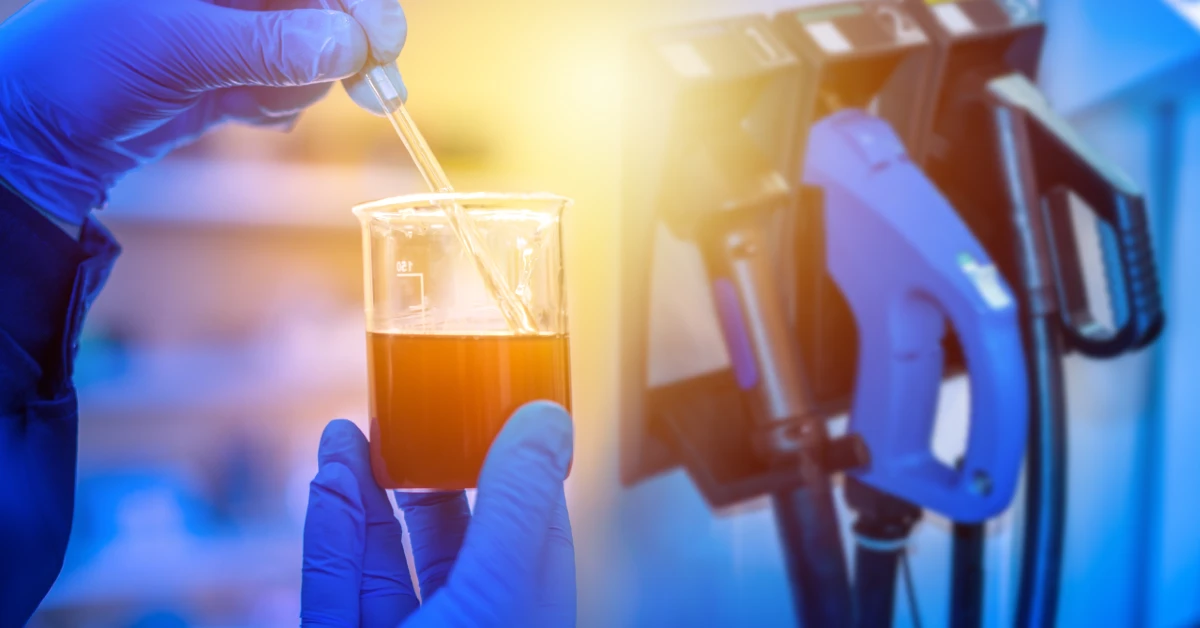
close up of hands testing fuel contamination in a lab with background image of fuel pump

Fuel Contamination Happens — So Prevent it Now

  • Blog

Fuel contamination happens, but following best practices can protect gasoline, diesel, diesel exhaust fluid (DEF) and aviation fuel from impurities that collect at the bottom of storage tanks.

“The way we look at things, contamination is always bad,” said John Higginbotham, general manager of B&B Oil Co.

“You don’t want to drink your coffee if there’s a fly in it, right?”

The same concept applies to contaminated fuel. It gives Higginbotham an ick. And he knows how it happens.

“I’m 30 years into this, and I can’t tell you the last time it was bad fuel,” he said.

“It’s bad housekeeping.”

What Is Fuel Contamination?

Fuel contamination occurs when a foreign material makes its way into clean fuel in a fuel storage tank. Fuel contamination can be physical (like dirt, rust or water) or microbial (like bacteria and fungi — diesel bugs — that feast when water gets into diesel tanks and jet fuel tanks).

fuel contamination: diesel bugs
MrCarter188, CC BY-SA 4.0 <https://creativecommons.org/licenses/by-sa/4.0>

What Causes Fuel Contamination?

Many times, fuel contamination happens because of human error, Higginbotham said.

“I don’t want to ramble here, but we say it all the time,” he said.

Higginbotham said it’s his job to care about clean fuel. He and his team at the 50-year-old fuel provider stress the importance of best practices to their bulk fuel customers in six states.

“They think, ‘Well, the cap closed on the tank. It’s fine. You know, we’re not leaving it open. We’re not dropping the nozzle in the dirt,’ which is all very important blocking and tackling,” Higginbotham said. “But what’s going on inside not only their tank, but the fuel tank inside that piece of equipment? You know it’s going to shut down the machine, right? A little bit of water, a little bit of dirt.”

Trouble ensues when those little bits of water and dirt add up over time and when the fuel stands still, he said. The cumulative effects equate to long-term engine risk, similar to the effects smoking has on the human body.

“You light up a cigarette. It’s not going to kill you today; it’s going to kill you 10 years from now,” Higginbotham said. “It’s taking life off of that engine, and we take it pretty seriously.”

Fuel filters catch dirt and sediment contaminants, and some filters are water absorbing. But fuel filters can’t catch everything. Particulate matter that slips past fuel filters causes friction in engines.

“Friction is heat. Heat is a lack of efficiency,” he said.

When water finds its way into fuel storage tanks, the problems go beyond engine inefficiency and failure. Water in tanks — especially diesel tanks and jet fuel tanks — also causes tank corrosion, rust, plus algae and microbial growth.

“That completely changes the way that catalyst performs,” he said.

B&B Oil Co. hedges against the cumulative effects of fuel contamination through its storage capacity strategy.

Fuel stored in smaller storage tanks is less likely to collect harmful levels of contamination before it gets used, Higginbotham said.

“We’re a little different than a lot of people,” he said. “We tend to load 95% or more of our wholesale fuels from the actual racks, the terminals. We store very little on-site.”

Higginbotham calls B&B Oil Co. a trucking company that deals in fuel. Its smaller storage tanks stay fuller, which means less air and moisture — contributors to microbial fuel contamination.

“In the Deep South, especially, we could have 40-degree swings from the morning to the evening,” Higginbotham said.

The company has offices in Georgia, Florida and the Carolinas; places with climates ripe for condensation in storage tanks.

“As you know, that fuel is going to expand, and it’s going to shrink,” he said. “Inside those fuel tanks, it’s going to get wet. So especially if you have a tank that’s half full … that stuff is going to get wet.”

After years of using traditional round fuel storage tanks, B&B Oil Co. recently started using small cube style tanks because of their portability and lids that protect against particulate contamination, Higginbotham said.

“It’s a really good tank,” he said. “Guys like us … we kind of geek out on some of that stuff.”

Contaminated Fuel Symptoms

lava-lampWhen water gets into a fuel tank, you might know because the fuel looks different, or you might not know because the water hasn’t been in there long enough for microbes to grow.

You’ll know when you have “wet fuel,” Higginbotham said.

“You can see that. It’s cloudy,” he said. “You take a sample, and it’s the lava lamp. But within tolerance — liquid or even some smaller particulate matter — you’re not going to see it. So the filters are going to catch it.”

The chemical reaction between water, air and the fuel will gum up the filters, though, Higginbotham said.

Slime and sludge also can damage entire fuel systems and are difficult to remove when they progress that far.

Fuel Contamination Testing

The most common point of use check is water finding paste such as Kolor Kut, Higginbotham said. The inexpensive product changes color when water or gasoline contacts the gauging tape in storage tanks.

Another way to determine whether water is present is to use a bilge pump to extract a small amount of fuel from a fuel storage tank and place the fuel into a clear container. Keep the container undisturbed in a dark spot for 24 hours. If there’s water in the fuel, it will sink to the bottom. If a thin black layer separates the water and fuel, the fuel has microbes.

For jet fuel, the most common contamination testing is a water tablet test using Shell water detecting capsules. They show if water in the fuel is above or below the maximum allowed limit of 30 ppm. Microbial testing for jet fuel is more involved and time-consuming than water testing.

microbes

How to Fix Contaminated Fuel

Diesel fuel typically has a shelf life of 6 months to a year; for gasoline, it’s 3 to 6 months, Higginbotham said.

“If we have a job that’s slow or a tank that’s underperforming … if it (fuel) sat for a month, we don’t really like to mess with it,” he said.

When that happens, B&B Oil Co. calls one of its partners to fix potentially contaminated fuel, Higginbotham said.

Industry best practices include fuel tank cleaning and fuel polishing.

A first step is allowing questionable and confirmed contaminated fuel to remain undisturbed. Then, a fuel-water separator drains the water. If contaminated fuel has microbes, a commercial biocide might be necessary.

Many companies provide fuel storage maintenance, including water and contaminant removal from fuel tanks. Common fuel additives to fix contaminated fuel include emulsifiers, which combine water with fuel, and demulsifiers, which separate water from fuel.

Fuel Tank Cleaning

Fuel contamination testing determines how a fuel tank needs to be cleaned and treated, depending on contaminants and severity. Higginbotham recommends annual cleaning, which also helps prevent tank corrosion and extends tank life.

Fuel Polishing

“If there’s any doubt, we’ll polish it,” Higginbotham said.

Fuel polishing involves several rounds of advanced filtration. Unlike biocides, which kill microbes but leave dead microbes in the fuel, fuel polishing removes the contaminants so they don’t turn into sludge.

How to Prevent Fuel Contamination

Fuel contamination happens, but you can prevent it and reduce the effects if you catch it early. These five tips can save you a lot of trouble.

  • Test fuel monthly.
  • Clean fuel tanks annually.
  • Perform regular tank inspections, maintenance and repairs.
  • Take immediate action on contaminated tanks. It will only get worse … and more expensive.
  • Do not deviate from standard operating procedures.

The biggest risk is complacency.

More Resources

Need Help? Ask the Experts

For help in choosing the right fuel storage tanks, bulk DEF tanks and aviation tanks, it makes sense to ask the experts. Unity Fuel Solutions is North America’s leader in double walled storage tanks. For advice on the tank and system that’s right for you, call the Unity team at 800-234-1689.